 Image 1 of 1
American parents spend more than $40 billion a year on youth sports — more than the annual revenue of any professional league in the country. It is the biggest sports business in America, and the only market its size with no inspector, no accreditor, and no standard of any kind. Soccer sits at the top of the bill: the most expensive team sport in the country to play, in the one nation where the world's cheapest game somehow costs families the most.
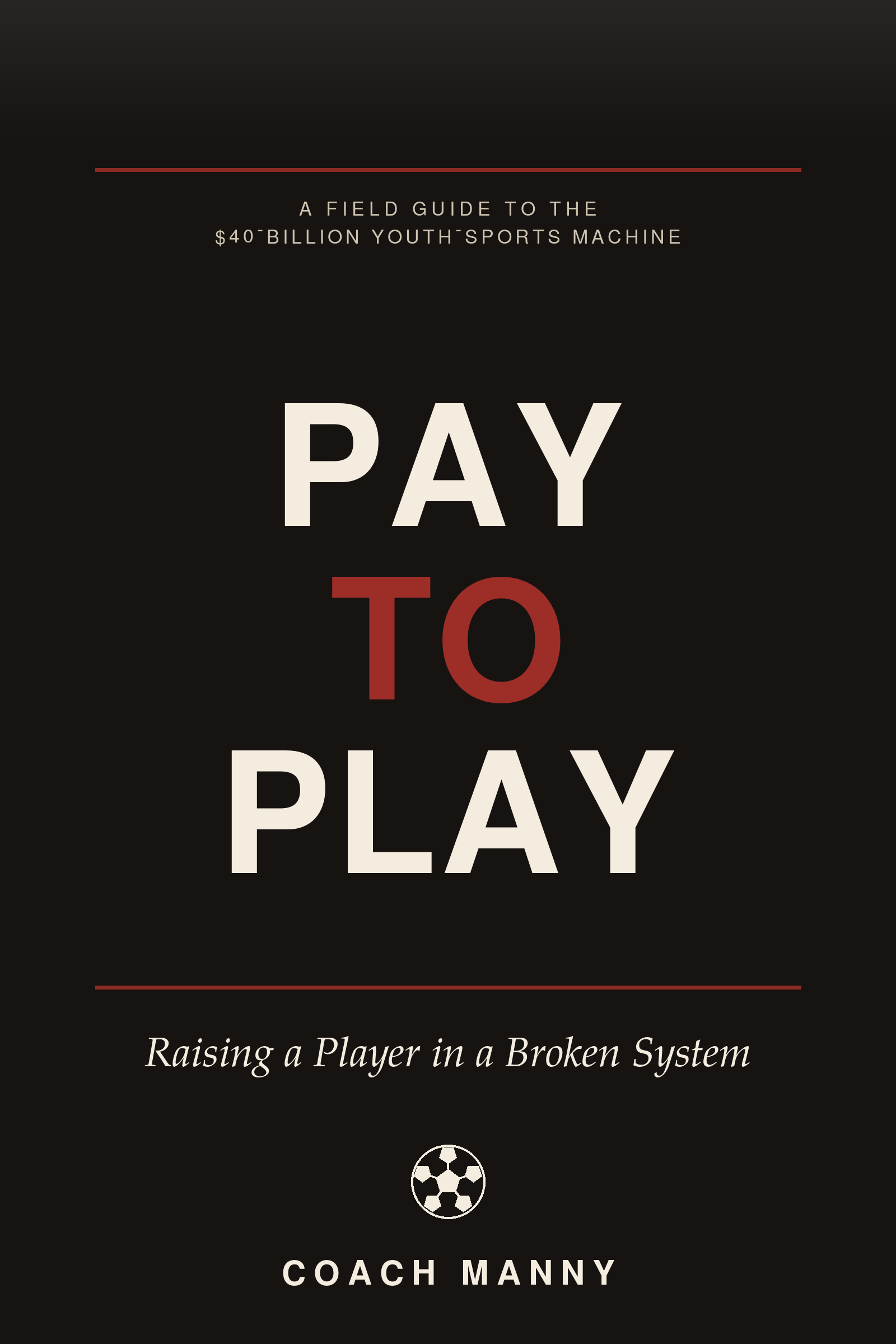
Pay to Play is a field guide to that broken system, written by a longtime Central Valley coach for the people who actually fund it — the parents on the far sideline, the volunteers with a bag of balls, and the players in the middle of it all. Its argument is simple and unsparing: American youth soccer charges more and delivers less than almost any other soccer nation, and the gap is not an accident. It is what happens when a beloved game becomes an unregulated market, when anxiety becomes the product, and when the one thing that actually develops players — good coaching, planned and paid for — is the one line nobody makes you see.
Across one hundred short, plainspoken chapters, the book follows the money, shows what real development looks like on paper, and travels to the countries that rebuilt youth soccer on purpose and can prove it worked. Then it turns practical: ten questions to ask before you write a check, how to read a club's books, how to watch a practice instead of a game, what a good coach actually does, and the handful of things genuinely within a young player's control.
This is not a hit piece on coaches, and not a promise your kid will go pro. It is something more useful — a way to think like a buyer in a market that has never had a single inspector, and the standard every honest club should have to meet.
You would never spend two thousand dollars on anything else without asking what it bought. Now you don't have to.
American parents spend more than $40 billion a year on youth sports — more than the annual revenue of any professional league in the country. It is the biggest sports business in America, and the only market its size with no inspector, no accreditor, and no standard of any kind. Soccer sits at the top of the bill: the most expensive team sport in the country to play, in the one nation where the world's cheapest game somehow costs families the most.
Pay to Play is a field guide to that broken system, written by a longtime Central Valley coach for the people who actually fund it — the parents on the far sideline, the volunteers with a bag of balls, and the players in the middle of it all. Its argument is simple and unsparing: American youth soccer charges more and delivers less than almost any other soccer nation, and the gap is not an accident. It is what happens when a beloved game becomes an unregulated market, when anxiety becomes the product, and when the one thing that actually develops players — good coaching, planned and paid for — is the one line nobody makes you see.
Across one hundred short, plainspoken chapters, the book follows the money, shows what real development looks like on paper, and travels to the countries that rebuilt youth soccer on purpose and can prove it worked. Then it turns practical: ten questions to ask before you write a check, how to read a club's books, how to watch a practice instead of a game, what a good coach actually does, and the handful of things genuinely within a young player's control.
This is not a hit piece on coaches, and not a promise your kid will go pro. It is something more useful — a way to think like a buyer in a market that has never had a single inspector, and the standard every honest club should have to meet.
You would never spend two thousand dollars on anything else without asking what it bought. Now you don't have to.